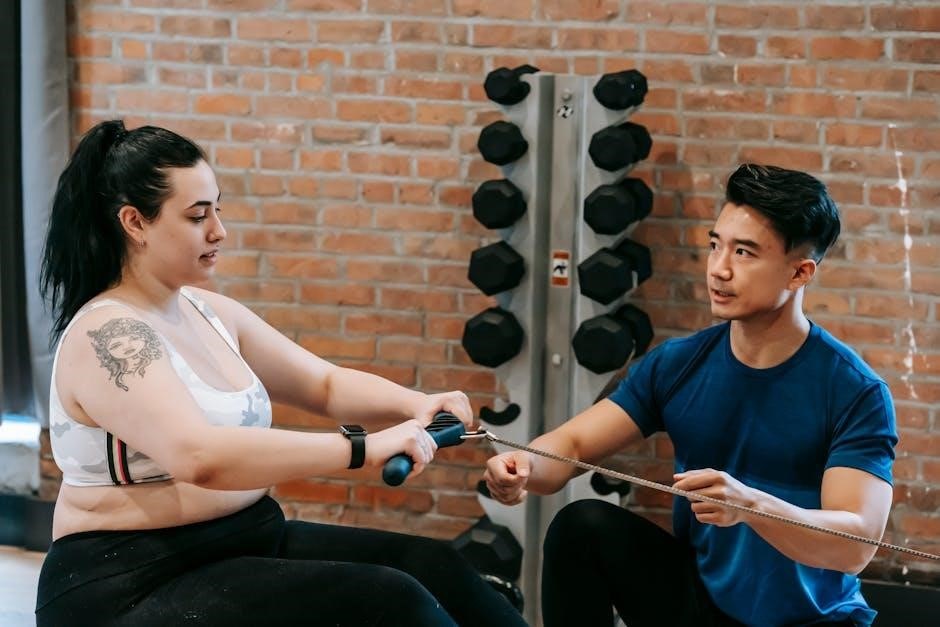
Functional Training Program PDF: A Comprehensive Plan
Functional training, encompassing dyspepsia and neurologic disorders, utilizes electrical stimulation for spinal injury rehabilitation, demanding a detailed PDF for effective implementation and tracking of progress.
What is Functional Training?
Functional training transcends traditional exercise, focusing on movements mirroring real-life activities. It’s about training your muscles to work together, rather than in isolation, preparing your body for everyday tasks and reducing injury risk. Think lifting, bending, twisting, and pushing – movements we perform constantly.
Unlike isolating biceps curls, functional training incorporates multi-joint exercises like squats, lunges, and push-ups. This approach acknowledges the body’s interconnectedness, improving coordination, balance, and overall movement efficiency. Consider conditions like functional dyspepsia or functional neurologic disorder; improving overall body control can positively impact symptom management by enhancing proprioception and reducing compensatory movement patterns.
Furthermore, functional electrical stimulation (FES), often used in spinal cord injury rehabilitation, exemplifies functional training’s core principle – restoring lost function through targeted movement patterns. A well-designed PDF program will emphasize these principles, providing a roadmap to improved physical capability.
Benefits of Functional Training
A comprehensive functional training PDF program delivers a multitude of benefits extending beyond aesthetic improvements. It enhances daily living by improving strength, balance, coordination, and flexibility – crucial for tasks like lifting groceries or navigating stairs. This holistic approach can positively influence conditions like functional dyspepsia, potentially reducing stress-related digestive discomfort through improved body awareness.
Moreover, functional training aids in injury prevention by strengthening stabilizing muscles and correcting movement imbalances. For individuals recovering from injuries, such as spinal cord injuries utilizing functional electrical stimulation (FES), it’s vital for regaining lost function and independence.
Furthermore, it improves athletic performance by translating gym gains into real-world movements. A well-structured PDF will detail how these benefits are achieved through progressive exercise selection and proper technique, ultimately fostering a more resilient and capable body.
Key Principles of Functional Training Program Design
Designing an effective functional training PDF program hinges on several core principles. Prioritize multi-planar movements – mimicking real-life activities – over isolated exercises. Integration is key; exercises should work multiple muscle groups simultaneously, enhancing coordination and efficiency. Consider individual needs, adapting the program based on fitness level and any existing conditions, like those addressed in functional dyspepsia care or spinal cord injury rehabilitation.
Progressive overload is crucial, gradually increasing intensity or complexity to continually challenge the body. A detailed PDF should outline clear progression pathways. Incorporate proprioceptive elements – exercises that challenge balance and body awareness – to improve stability. Remember, mirroring the research into functional electrical stimulation (FES), focus on restoring or improving functional movement patterns.

Components of a Functional Training PDF Program
Functional programs, like those aiding neurologic or spinal issues, require warm-ups, mobility, core work, and movement exercises detailed within a comprehensive PDF guide.
Warm-up Exercises
Warm-up exercises are crucial for preparing the body for functional movements, mirroring the preparatory steps needed for therapies like functional electrical stimulation used in spinal cord injury rehabilitation. A well-structured warm-up increases blood flow to muscles, enhances joint mobility, and improves neuromuscular activation.
Begin with 5-10 minutes of low-intensity cardio, such as marching in place or arm circles, to elevate heart rate. Follow this with dynamic stretches like leg swings, torso twists, and arm reaches. These movements mimic real-life actions, preparing the body for the demands of the workout.
Include exercises that target major muscle groups, focusing on range of motion. For example, incorporate cat-cow stretches to improve spinal mobility, addressing potential issues related to functional dyspepsia discomfort. Prioritize controlled movements and proper form to prevent injury and maximize effectiveness. A detailed PDF should visually demonstrate each exercise.
Mobility Drills
Mobility drills are essential components of a functional training PDF, enhancing movement quality and addressing limitations that might hinder rehabilitation, similar to the needs of individuals undergoing functional electrical stimulation for spinal cord injuries. These drills focus on improving range of motion in key joints, preparing the body for complex movements.
Include drills like hip circles, thoracic rotations, and ankle mobilizations. These exercises target areas often restricted due to sedentary lifestyles or underlying conditions, potentially mirroring discomfort experienced with functional dyspepsia. Prioritize controlled, pain-free movements.
A comprehensive PDF should detail each drill with clear instructions and visual aids. Incorporate drills that address multiple planes of motion, promoting balanced mobility. Consider incorporating foam rolling to release muscle tension and further enhance range of motion. Regular mobility work improves movement efficiency and reduces injury risk.
Core Stability Exercises
Core stability exercises are foundational within a functional training PDF, mirroring the importance of neurological function addressed in functional neurologic disorder therapies. A strong core provides a stable base for all movements, crucial for rehabilitation and preventing injury, much like supporting recovery from spinal cord injuries with electrical stimulation.
Include exercises like planks (various variations), bird-dogs, and dead bugs. These exercises engage deep core muscles, improving control and endurance. Focus on maintaining a neutral spine throughout each exercise, avoiding excessive arching or rounding.
The PDF should clearly illustrate proper form and progression. Start with easier variations and gradually increase difficulty as strength improves. Consider incorporating anti-rotation exercises to challenge core stability in multiple planes. A robust core is vital for functional movement and overall well-being, potentially alleviating discomfort similar to functional dyspepsia.
Movement-Based Exercises
Movement-based exercises are the cornerstone of a functional training PDF, aiming to replicate real-life activities, much like the functional improvements sought through electrical stimulation for spinal cord injury rehabilitation. These exercises integrate multiple muscle groups and movement patterns, enhancing coordination and efficiency.
Examples include wood chops, Russian twists with medicine ball, and farmer’s walks. These movements challenge stability and control while mimicking everyday tasks. The PDF should emphasize proper technique and controlled movements, avoiding momentum.
Progressions can involve increasing resistance, altering the base of support, or adding complexity to the movement pattern. Consider incorporating exercises that address all planes of motion. This approach fosters holistic fitness, potentially aiding in managing conditions like functional dyspepsia by promoting overall well-being and reducing stress.
Exercise Selection for a Functional Training PDF
Functional training PDF exercise choices, mirroring spinal injury electrical stimulation, should prioritize movements addressing neurologic and dyspepsia-related limitations for optimal results.
Squat Variations
Squat variations are foundational within a functional training PDF, mirroring the rehabilitation principles applied to conditions like spinal cord injuries and functional dyspepsia. Begin with bodyweight squats, emphasizing proper form – a neutral spine, engaged core, and controlled descent. Progress to goblet squats, holding a dumbbell or kettlebell close to the chest, enhancing core stability and promoting upright posture.
Introduce front squats, demanding greater core engagement and quadriceps activation. For advanced trainees, back squats with a barbell offer increased loading potential. Consider split squats and Bulgarian split squats to address unilateral strength imbalances, crucial for functional movement patterns. Each variation should be included with clear instructions and visual aids within the PDF, detailing proper technique and common errors. Modifications for varying fitness levels, potentially referencing electrical stimulation techniques for those with limited mobility, should also be provided.
Lunge Variations
Lunge variations are essential components of a comprehensive functional training PDF, mirroring the rehabilitation focus seen in treatments for functional neurologic disorder and spinal cord injuries. Start with forward lunges, emphasizing controlled movement and maintaining a stable core. Progress to reverse lunges, which can be easier on the knees and promote posterior chain activation.
Introduce walking lunges to enhance dynamic stability and coordination. Lateral lunges target the adductors and abductors, improving lateral movement proficiency. For increased challenge, incorporate deficit lunges (stepping onto a slightly elevated surface) or weighted lunges using dumbbells or a barbell. The PDF should detail proper form, common mistakes, and scaling options. Consider including notes on how these exercises can be adapted, potentially utilizing electrical stimulation, for individuals with limited range of motion or muscle weakness, similar to rehabilitation protocols.
Push-up Variations
Push-up variations are foundational within a functional training PDF, offering scalable challenges akin to the progressive rehabilitation seen with functional electrical stimulation for spinal cord injuries. Begin with wall push-ups for beginners, progressing to incline push-ups (hands elevated) to reduce the load; Standard push-ups build upper body strength and core stability.
Introduce decline push-ups (feet elevated) for increased difficulty, targeting the upper chest and shoulders. Wide-grip push-ups emphasize the chest, while close-grip push-ups focus on the triceps. Plyometric push-ups (explosive push-ups) enhance power. A detailed PDF should illustrate proper form, breathing techniques, and modifications for varying fitness levels. Consider incorporating notes on how to adapt these exercises, potentially mirroring the controlled muscle activation achieved through electrical impulses, for individuals needing assistance.
Pull-up/Row Variations
Pull-up and row variations are crucial components of a comprehensive functional training PDF, mirroring the muscle activation strategies employed in therapies like functional electrical stimulation (FES) for spinal cord injury rehabilitation. Assisted pull-ups, using resistance bands, allow beginners to build strength. Standard pull-ups target the back and biceps, promoting upper body pulling strength.
Row variations, including dumbbell rows, barbell rows, and cable rows, offer diverse angles of attack. Inverted rows, performed under a bar, provide a scalable alternative. A well-designed PDF should detail proper form, emphasizing controlled movements and scapular retraction. Include progressions, similar to gradually increasing electrical impulse intensity, and regressions for different fitness levels. Highlight the importance of core engagement throughout each exercise, fostering stability and preventing injury.
Carry Exercises
Carry exercises are foundational to a functional training PDF, building real-world strength and endurance – mirroring the demands placed on individuals undergoing rehabilitation, such as those utilizing functional electrical stimulation (FES) post-spinal injury. Farmer’s carries, holding heavy weights at your sides, challenge grip strength and core stability. Suitcase carries, with a weight in one hand, improve lateral stability and resist rotation.
Overhead carries, holding a weight overhead, demand significant shoulder and core control. A comprehensive PDF should illustrate proper posture and breathing techniques. Progressions involve increasing weight or distance. These exercises translate directly to everyday activities, enhancing functional capacity; Emphasize maintaining a neutral spine and engaging the core throughout each carry, promoting safe and effective movement patterns, much like restoring neurologic function.

Program Structure & Progression
Functional training PDF programs require structured workouts, considering dyspepsia or neurologic recovery, with progressive overload via frequency, sets, reps, and intensity adjustments.
Workout Frequency & Duration
Determining optimal workout frequency and duration within a functional training PDF program necessitates careful consideration of individual fitness levels and recovery capabilities. A beginner-level program might start with 2-3 sessions per week, lasting approximately 45-60 minutes each. These sessions should prioritize foundational movement patterns and core stability.
As individuals progress, frequency can be increased to 3-4 sessions weekly, potentially extending duration to 60-75 minutes. It’s crucial to incorporate rest days to allow for muscle recovery and prevent overtraining, mirroring approaches used in rehabilitation for conditions like spinal cord injuries or managing neurologic symptoms.
The duration of each workout should be allocated strategically, balancing warm-up, movement-based exercises, and cool-down phases. Remember, consistency is paramount; shorter, more frequent sessions can be more effective than infrequent, lengthy ones, especially when addressing functional limitations or dyspepsia-related fatigue.
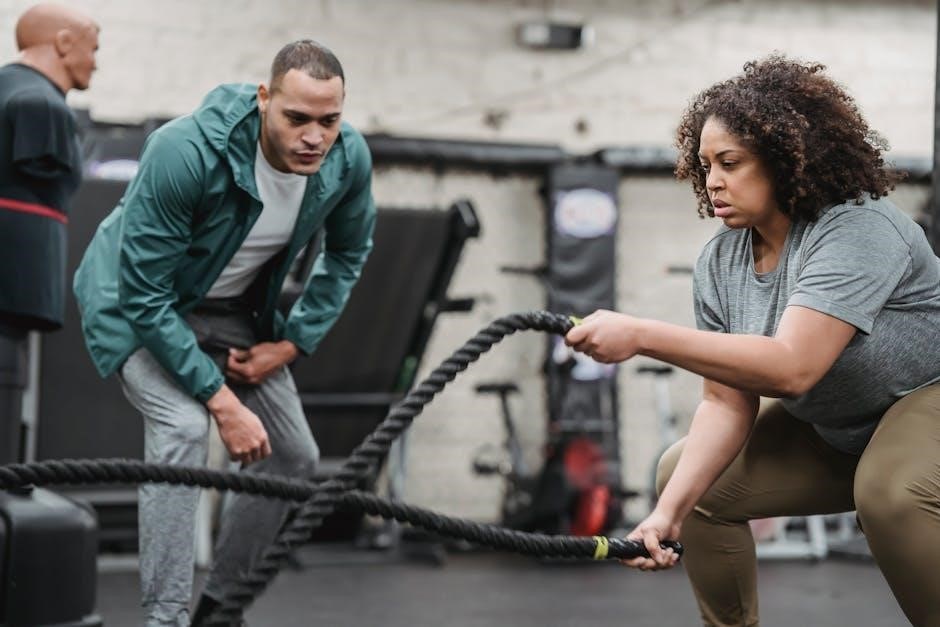
Sets, Reps, and Rest Periods
Within a functional training PDF program, structuring sets, repetitions, and rest periods is vital for achieving desired outcomes. For strength and power development, 3-4 sets of 6-12 repetitions are generally recommended, utilizing a weight or resistance that challenges the individual. Rest periods should range from 60-90 seconds between sets, allowing for adequate recovery.
When focusing on muscular endurance and metabolic conditioning, higher repetitions (15-20+) with lighter resistance and shorter rest periods (30-60 seconds) are more appropriate. This approach can be beneficial for individuals managing conditions like functional dyspepsia, where fatigue is a common symptom.
Consider incorporating variations based on the exercise and individual needs, mirroring the personalized approach used in neurologic rehabilitation or spinal injury recovery. Proper rest is as crucial as the exercise itself, promoting adaptation and preventing injury.
Progressive Overload Strategies
A cornerstone of any effective functional training PDF program is progressive overload – systematically increasing the demands placed upon the body. This isn’t simply adding weight; it’s a multifaceted approach. Strategies include increasing repetitions, sets, or decreasing rest periods. Altering exercise complexity, transitioning from assisted to unassisted movements, is also key, mirroring advancements in spinal cord injury rehabilitation using functional electrical stimulation.
Consider manipulating exercise variables like range of motion or tempo. For individuals with conditions like functional dyspepsia or neurologic disorders, gradual increases are paramount. Monitor for signs of fatigue or discomfort, adjusting the program accordingly.
Documenting progress within the PDF allows for informed adjustments, ensuring continued challenge and adaptation. Prioritize quality of movement over quantity, preventing compensatory patterns.

Creating Your Functional Training PDF
PDF creation requires accessible formatting, clear exercise demonstrations – images or videos – and logical organization, mirroring spinal injury rehabilitation guides and dyspepsia care plans.
PDF Format & Accessibility
Ensuring your functional training PDF is universally accessible is paramount. Opt for a universally readable PDF/A format to guarantee long-term compatibility and prevent rendering issues across different devices and software. Prioritize clear, concise language, avoiding jargon that might confuse users with varying fitness backgrounds.
Structure the document with proper headings (like those found in Mayo Clinic’s dyspepsia care guides) and alt-text for all images and videos, catering to visually impaired individuals. Employ sufficient color contrast between text and background for readability.
Consider embedding fonts to maintain consistent appearance, regardless of the user’s system fonts. Test the PDF with screen readers to verify accessibility. A well-formatted, accessible PDF, similar to resources detailing spinal cord injury rehabilitation, enhances user experience and maximizes program impact.
Exercise Demonstrations (Images/Videos)

High-quality visual aids are crucial for a successful functional training PDF. Include clear images or, ideally, short videos demonstrating proper form for each exercise. These visuals should showcase the full range of motion and highlight key muscle engagement, mirroring the detailed guidance offered in resources for conditions like functional dyspepsia or neurologic disorders.
Supplement each demonstration with concise, step-by-step instructions. Consider multiple angles for complex movements, similar to how spinal cord injury rehabilitation utilizes varied perspectives. Ensure videos are appropriately compressed for quick loading times without sacrificing clarity.
Label images and videos clearly, referencing the exercise name and any relevant modifications; Prioritize demonstrations performed by qualified fitness professionals to ensure accuracy and safety.
Program Layout & Organization
A well-structured functional training PDF should prioritize user experience. Begin with a clear table of contents, allowing easy navigation to specific exercises or program phases, much like the organized care plans for conditions such as functional dyspepsia. Group exercises logically – warm-up, core, movement-based – and use consistent formatting throughout.
Employ headings, subheadings, and bullet points to break up text and enhance readability. Consider a weekly or phase-based layout, outlining the progression of exercises. Include a dedicated section for notes, allowing users to track their progress and personalize the program, mirroring the detailed tracking in spinal injury rehabilitation.
Maintain a clean, uncluttered design, avoiding excessive graphics or distracting fonts. Accessibility is key; ensure the PDF is screen-reader compatible.

Safety Considerations & Modifications
Prioritize proper form, adapting exercises for varying fitness levels, acknowledging neurologic conditions, and avoiding exacerbation of dyspepsia or spinal injury symptoms.

Proper Form & Technique
Maintaining impeccable form during functional exercises is paramount to prevent injuries and maximize effectiveness, especially considering potential underlying conditions like functional dyspepsia or neurological disorders. A PDF program must emphasize detailed instructions and visual aids demonstrating correct alignment and movement patterns.
Focus on controlled movements, engaging core stability throughout each exercise. Avoid rushing or using momentum, as this compromises form and increases risk. Individuals with spinal cord injuries utilizing functional electrical stimulation (FES) require particularly attentive form guidance to ensure proper muscle activation and prevent compensatory movements.
The PDF should highlight common form errors and provide cues for correction. Consider including sections on self-assessment techniques, allowing users to monitor their own technique. Prioritizing quality over quantity is crucial; fewer repetitions with perfect form are far more beneficial than numerous repetitions performed incorrectly. Proper technique builds a solid foundation for progressive overload and long-term success.
Modifications for Different Fitness Levels
A comprehensive functional training PDF program must cater to diverse fitness levels, acknowledging conditions like functional dyspepsia or neurological impairments that may limit exercise capacity. Offer scalable modifications for each exercise, providing regressions for beginners and progressions for advanced individuals.
Beginners might start with bodyweight exercises or utilize assisted variations, while advanced users can incorporate resistance bands, dumbbells, or more complex movement patterns. For those recovering from spinal cord injuries and utilizing FES, modifications should focus on adjusting stimulation parameters and range of motion.
The PDF should clearly outline these modifications, including visual demonstrations. Emphasize the importance of listening to one’s body and adjusting the program accordingly. Prioritize safety and gradual progression, ensuring individuals can perform exercises with proper form before increasing intensity or complexity. This inclusivity maximizes program accessibility and effectiveness.
Contraindications & Precautions
A functional training PDF must detail contraindications and precautions, recognizing potential impacts on individuals with conditions like functional dyspepsia or functional neurological disorders. Prior to starting, a medical clearance is advised, especially for those with pre-existing conditions or spinal cord injuries undergoing FES.
Avoid exercises exacerbating pain or discomfort. Individuals with digestive issues should modify movements to minimize abdominal pressure. Those with neurological symptoms require careful monitoring and adjusted stimulation parameters.
The PDF should emphasize proper form to prevent injuries. Caution against overexertion and highlight the importance of gradual progression. Include a disclaimer advising users to consult a healthcare professional if experiencing adverse effects. Clearly state that this program isn’t a substitute for medical treatment, ensuring responsible program utilization.

Resources & Further Learning
Mayo Clinic’s research on FES and spinal injuries, alongside PDF templates, offer valuable insights for expanding knowledge of functional training programs.
Recommended PDF Templates
Selecting a suitable PDF template is crucial for a professional and user-friendly functional training program. Consider templates designed specifically for fitness or rehabilitation, offering pre-formatted sections for workout plans, exercise descriptions, and client progress tracking. Look for templates that accommodate images or videos demonstrating proper exercise form – vital for safety and effectiveness, mirroring Mayo Clinic’s focus on detailed care.
Canva and Adobe Spark provide customizable templates, allowing you to tailor the design to your branding. Etsy also hosts a variety of fitness-focused PDF templates created by independent designers. Prioritize templates with clear layouts, easy navigation, and accessibility features, ensuring the program is usable for individuals with varying technical skills. A well-structured PDF, similar to resources supporting spinal cord injury rehabilitation, enhances adherence and outcomes.
Ensure the template supports embedding hyperlinks to external resources, such as demonstration videos or articles on functional dyspepsia management, enriching the user experience. Remember to test the PDF’s functionality across different devices and PDF readers before distribution.
Online Functional Training Resources
Numerous online platforms offer valuable resources to supplement your functional training PDF program. Mayo Clinic’s website provides insights into managing conditions like functional dyspepsia, emphasizing a holistic approach applicable to overall wellness. Research articles on functional electrical stimulation (FES), as highlighted by Mayo Clinic studies, can inform exercise selection for rehabilitation programs.
Websites like ACE Fitness and NASM offer articles, courses, and continuing education credits related to functional training principles and program design. YouTube channels featuring certified trainers demonstrate proper exercise technique, crucial for safety and effectiveness. Explore platforms like Physiotutors for detailed explanations of movement patterns and rehabilitation strategies.
Consider utilizing online tools for creating interactive PDFs with embedded videos and quizzes, enhancing engagement. Remember to critically evaluate the credibility of online sources, prioritizing evidence-based information and qualified professionals, mirroring the expertise found at Mayo Clinic.